I didn’t know I had ADHD until I was 42.
But looking back, music always knew.
From as early as I can remember, music was the one place my brain settled. Not calmed down. Not switched off. Settled. Fully in. Every layer, every detail, every decision someone made in a studio or on a stage.
Everything else could wait. Music couldn’t.
Someone asked me once if I felt I was at a literacy deficit. I don’t read much. Fair observation.
No. Not even slightly.
Because I read music. Not notation, not dots on a page. I read it with my ears and my mind. I hear imagery. Themes and subthemes. Structure. I see pictures when I listen. Always have.
That’s not a metaphor. That’s genuinely how it works for me.
My early loves were the Carpenters, ABBA, whatever was in the charts, anything I could get my hands on. And almost immediately I noticed something. I wasn’t just listening to the song. I was listening to all of it. The bassline underneath. The counter melody sitting just behind the vocal. The harmonies stacked on top of each other.
The Carpenters sound simple. They’re not. Karen Carpenter’s vocals are overdubbed with extraordinary precision. The production choices are technically complex, full of detail, full of little hidden things most people never notice. I noticed all of it. I couldn’t not.
At 12 I used a sequencer on my keyboard to record six separate parts of Dancing Queen. Bassline, chords, melody, the lot. It was pretty on point.
I didn’t think of that as an achievement at the time. It was just what I did with music.
Through school I learned drums and keyboards. Not to perform. To understand.
Drum lessons gave me rhythm as a framework, how music is held together underneath. Keys gave me harmony and structure, how chords and scales are the bones of everything you hear.
The one thing I never cracked was reading notation. I tried. It didn’t stick.
But I could hear it. All of it. And I could replicate it. That was enough. More than enough.
I still do this now.
A low-lit room. Good speakers or headphones. An evening that disappears.
Classical music came later and opened up a whole other dimension. When you understand how an orchestra is constructed, what each section is doing, how a composer builds tension across twenty minutes, it’s like reading a very long, very intricate systems map.
Which, it turns out, is exactly what I do with organisations.
I didn’t connect any of this to ADHD until recently. But it makes complete sense now.
My brain doesn’t do shallow. It either doesn’t engage, or it goes all the way in. It looks past the surface, past the obvious, into the sum of the parts. What’s working. What isn’t. What’s holding it together. What’s quietly falling apart.
That’s how I listen to music.
It’s also how I work.
I’ve spent my career looking at organisations the way I listen to an album. Not just what the strategy says, but what’s underneath it. The counter-melody. The rhythm section. The bits people aren’t playing loud enough. The bits someone added that don’t quite fit.
Most people hear the song.
I’m listening for everything else.
Nice wee side note: I work for a music charity and have done for years. That probably wasn’t a coincidence.
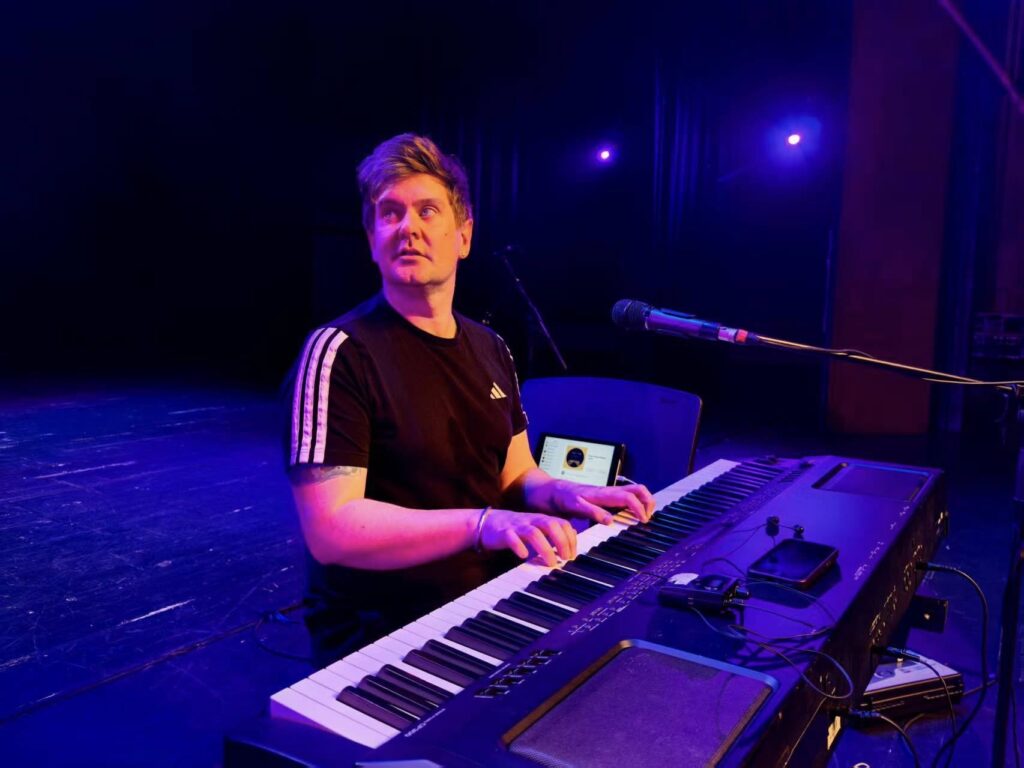
And somewhere along the way I also became the musical director and one of the lead performers in a Carpenters tribute show.
The same Carpenters I was pulling apart at age eight. The overdubs, the harmonies, the hidden detail in the production.
Turns out listening that closely to something for long enough means you eventually become part of it.
Leave a Reply